

Environmental Funders Network & Change in Nature
Resources for fundraisers
Collaborating with and for nature…
Since 2025, Change in Nature and the Environmental Funders Network have jointly delivered immersive nature retreats for pioneering fundraisers. The impact so far has been striking, with 100% of participants reporting that they reconnected with purpose, improved their sense of wellbeing, gained valuable fresh insights and deepened their professional support network.
We’re now working to make some of these practices more widely available through the Environmental Fundraisers Handbook video podcast. At the end of each episode we share inspiration and insights from the natural world, and a suggested nature connection exercise for you to practice. This page contains further resources that can help you dive deeper.
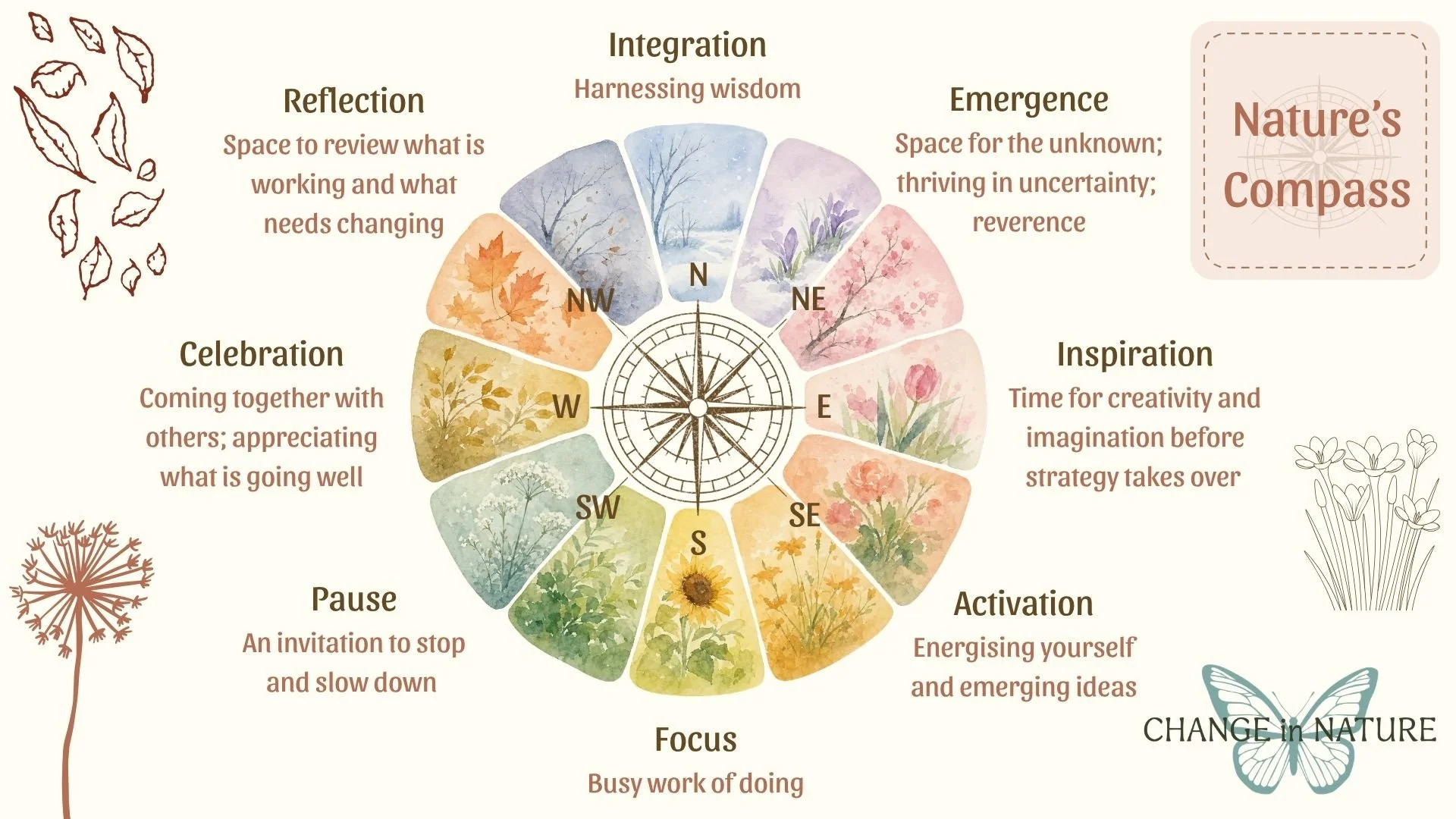
Nature's Compass: A Regenerative Approach to Environmental Philanthropy
Environmental funders and fundraisers are passionate about protecting the natural world - but the way we do this work can feel deeply disconnected from nature; undermining our creativity, wellbeing and ultimately our impact. In this webinar, Change in Nature CIC share a tried and tested framework for evolving how we work in an increasingly uncertain and challenging context, informed by the intelligence of living systems. We hope you will feel and ready to apply tangible changes in your work and life, and with the beginning of a conversation about how we might change as a sector.
Episode 1: Finding your voice
This episode explores how fundraisers can communicate environmental issues with honesty, clarity and hope. It focuses on moving beyond fear-based or overly simplified messaging towards storytelling that is values-led, authentic and grounded in purpose. Guests bring perspectives from research, fundraising practice and communications, exploring what inspires action, what funders respond to, and how to tell complex environmental stories authentically and in ways that resonate without overwhelming.
Stump Speech vs. Sprout Speech
“The stump speech is the pre-planned, baked spiel that people have given a thousand times. We all have stump speeches and at many of the more formal and important gatherings we attend, it is the stump speeches that come out to play.
If the term “stump speech” evokes the strongest, most durable part of the tree, the part that is firmly in the ground, the sprout is by contrast the newest and weakest part of the tree. It is the part still forming.
What I learned... is its people's sprouts that are most interesting, and perhaps most prone to making a group feel closely connected enough to attempt big things together.
So much in our culture tells us to present our stump speeches anytime we're in the vicinity of opportunity, especially at something like a conference. But I keep stumbling on interesting experiments doing just the opposite - inviting people with impressive stump speeches to leave them at home and bring their sprout speeches instead.”
― Priya Parker, The Art of Gathering: How We Meet and Why It Matters
Suggested Practice:
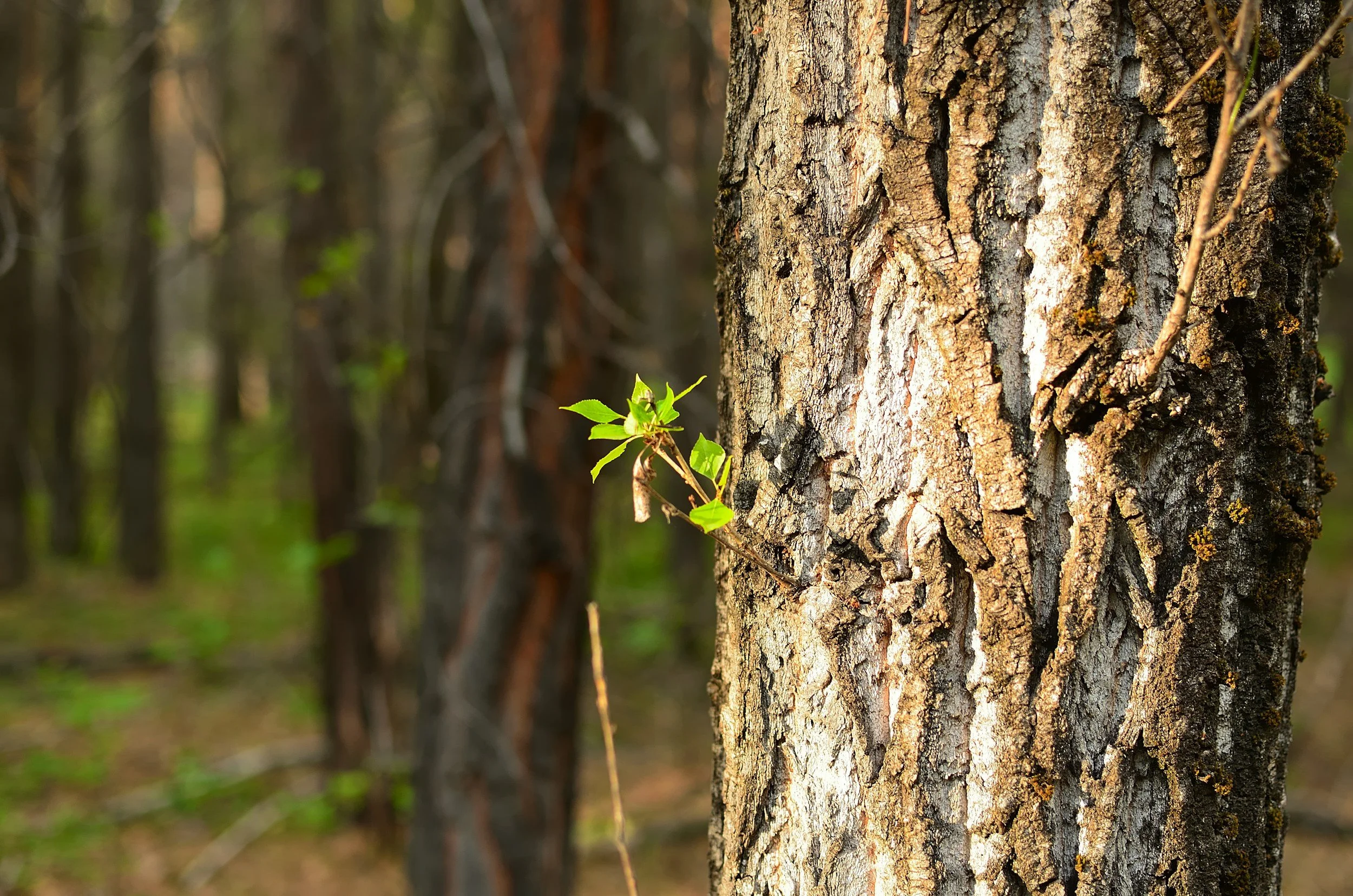
Spend some time observing a tree.
As you look at its solid trunk and protective bark, ask yourself: What is the polished, safe version of the environmental story you usually tell? What are the pre-packaged phrases, statistics, or talking points you use because they feel "objective" or "expert"?
Now notice the newest growth on the tree - new leaves or shoots that have sprouted in this year’s cycle - and ask yourself: Where does your relationship with this environmental issue live? Think of a specific, unpolished moment when you felt overwhelmed by what’s happening, or a moment of hope that moved you.
If you’re struggling to connect with your “sprout speech/story”, it may be that you need to make space to (re)connect emotionally with the issue you’re fundraising for. What might that look like?
Episode 2: Understanding the bigger picture
Here, the focus widens to the systems shaping environmental issues and environmental funding. Fundraisers are supported to step back from day-to-day pressures and consider the broader landscape - funding trends, power dynamics, and the interconnected nature of environmental and social issues. The conversations explore how to position fundraising within systems change, how to communicate complex, intersectional work, and where opportunities for collaboration and influence lie.
Suggested Practice: Connect with our 4.6 billion year life story…
We invite you to lie down, close your eyes and viscerally connect with the story of life on our incredible living planet. It is so easy to feel completely weighed down by the systems, structures and perils of this time. Seeing this moment through a completely different temporal perspective can both create some healthy space from immediate pressures and embolden us to act from a place of deep purpose.
Episode 3: Creating meaningful relationships
This episode centres on relationships as the foundation of effective fundraising. It challenges transactional approaches and instead explores trust-based partnerships between funders and fundraisers, as well as the internal cultures that support them. Guests share insights from philanthropy, corporate fundraising and sector research, highlighting the importance of transparency, mutual respect, and long-term thinking. The episode also touches on the often-overlooked relationship with nature as a source of motivation and grounding in this work.
What does “nature connection” really mean? How can we be in a more intentional relationship with nature?
Suggested Practice:
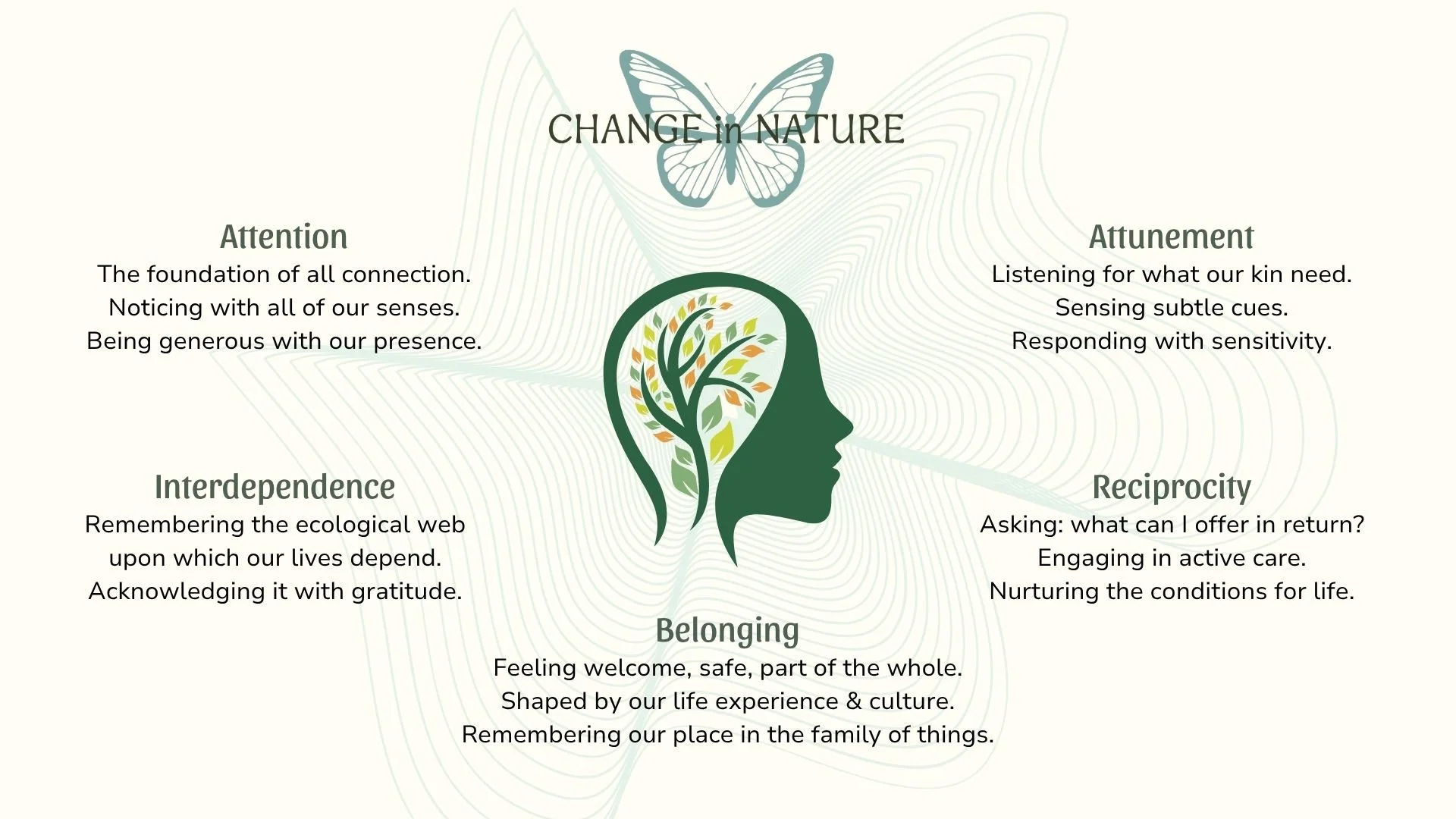
Take some time to reflect on the qualities of your relationship with the wider web of life. How much attention do you give to the non-human, how attuned are you to what other species may need, how often to you consciously acknowledge our interdependence, do you know how to give back as well as receive, and how deeply do you feel like you belong?
Are there ways you could tend to this relationship more intentionally? Maybe going for a mindful walk without your phone. Or giving thanks to the soil, worms and bees before a meal. Or even learning some simple micro-scale rewilding techniques…
Episode 4: Building community & wellbeing
The final episode addresses sustainability - both personal and collective. It recognises burnout as a systemic issue within environmental work and explores how fundraisers can support one another through community, peer learning and shared practice. Themes include burnout prevention, resilience, organisational responsibility for wellbeing, and the role of networks like the Green Fundraisers Forum in fostering connection, confidence and collective strength.
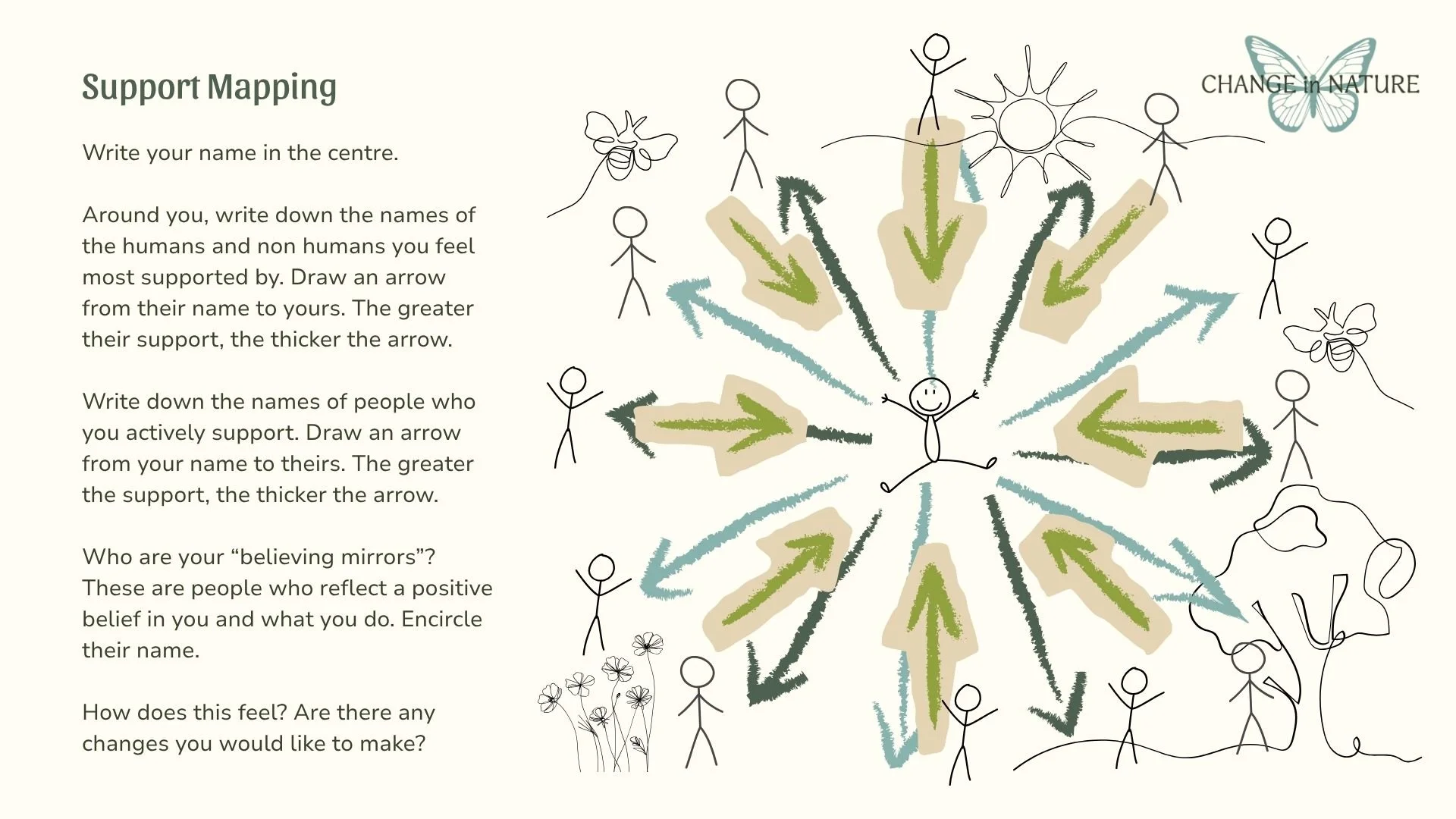
Suggested Practice: Draw a support map
This is a resilience practice adapted from Chris Johnstone’s book “Find Your Power” - which we have expanded to include support from the non human world.
If you’d like to go deeper with us, we offer…
-

Programmes
Grow your capacity to catalyse change. Our transformative programmes are bold, beautiful and lots of fun.
-

Teams
Strengthen your ability to tackle complex challenges together. Unlock fresh thinking and deep collaboration.
-

Coaching
Make meaningful changes in your work and life. Connect with your core values and take courageous action.
-
"I came with uncertainty and left with renewed energy and clarity."
-
"A place of inspiration and shared wisdom. Fuel for the rocky roads ahead."
-
"An essential experience for change makers. I feel a new sense of vitality and hope."